DIY Fixes to Try for SAMSUNG Appliances Before Calling for repair Services

Samsung Refrigerator Not Cooling? DIY Fixes to Try Before Calling Samsung Customer Services Your Samsung refrigerator warms up overnight, your washer stops mid-cycle, or your dishwasher leaves a puddle on the kitchen floor. It always seems to happen at the worst possible time. For many homeowners, the first move is to search for Samsung customer services and hope for a quick appointment. But before you sit in a queue, there are a few simple checks you can do yourself, and there is a local option that can often get a technician to your door faster. This guide covers the most common Samsung refrigerator repair problems, the Samsung DIY repair steps that are safe to try at home, and the signs that it’s time to call a professional for Auburn appliance repair. Common Samsung Refrigerator Problems: Samsung refrigerators are popular for their features, but like any appliance, they can develop faults over time. The problems we hear about most often include: The fridge or freezer isn’t cooling. Food spoils quickly, and the compartments feel warm. The ice maker has stopped working. It makes no ice, makes too little, or the ice clumps together. Water is leaking. You find puddles inside the fridge or on the floor. Frost is building up. Ice collects on the freezer walls or blocks the vents. The fridge is making loud or unusual noises. Buzzing, clicking or rattling can point to a fan or compressor issue. An error code appears on the display. Your model’s manual explains what each code means. If you recognize one of these, don’t panic. Many of them have simple causes. Samsung DIY Repair: What You Can Safely Try Before you call anyone, work through these checks. They cost nothing and take only a few minutes each. Check the power and the settings Make sure the fridge is plugged in firmly and the outlet works. Test it with a small lamp or phone charger. Then check the temperature settings, because they are easy to knock by accident. Many people also find that “Demo” or “Power Cool” modes are switched on without realizing it. Clean the condenser coils Dust and pet hair on the coils make the fridge work harder and cool less effectively. Unplug the fridge first. Then use a vacuum with a brush attachment or a coil brush to clean the coils, which are usually behind the bottom grille or on the back of the unit. Inspect the door seals A worn or dirty gasket lets warm air in. Wipe the seals with warm, soapy water and check for cracks or gaps. A simple test is to close the door on a piece of paper. If it slides out easily, the seal may need replacing. Don’t overload or block the vents Cold air needs room to circulate. Check that food isn’t pressed against the vents inside the fridge and freezer, and leave a little space between the back of the unit and the wall. Reset the refrigerator A simple power reset can clear minor electronic glitches. Unplug the fridge for about five minutes, plug it back in, and give it several hours to return to temperature. Your owner’s manual may also list a model-specific reset. Clear the ice maker and defrost drain If the ice maker is jammed or the freezer is leaking water, check for ice blocking the fill tube or the defrost drain. Gently thawing the blockage with warm water is sometimes all it takes. Other Samsung Appliances You Can Troubleshoot: Samsung makes much more than refrigerators, and most of these appliances have quick fixes of their own. Samsung washer: If it won’t drain or spin, check that the drain hose isn’t kinked and clean the drain pump filter. Make sure the load is balanced. Samsung dryer: If clothes take too long to dry, clean the lint trap and check the vent hose for blockages. A clogged vent is also a fire hazard, so don’t ignore it. Samsung dishwasher: If it isn’t draining or cleaning well, clean the filter at the bottom of the tub and check the spray arms for clogged holes. Samsung range or oven: If it heats unevenly or won’t start, confirm the controls aren’t locked and the right mode is selected. Samsung microwave: If it runs but doesn’t heat, check that the door closes fully and the control panel isn’t locked. Never open the casing yourself. Do you have any other Appliance check our Services for the other options. When DIY Isn’t Enough: DIY repair is great for simple problems, but some faults need a trained technician. Stop and call a professional if you notice: The fridge still isn’t cooling after you’ve tried the steps above. A burning smell, sparks or a tripped breaker. A compressor that clicks on and off repeatedly, or runs constantly without cooling. Water near electrical parts or wiring. The same error code coming back after a reset. Opening sealed systems or working with electrical components without training can be dangerous and may cause more expensive damage. It can also affect your warranty. Why Choose Staunch Appliance Pro for Auburn Appliance Repair When your Samsung appliance breaks down, Staunch Appliance Pro can help. Mr. Kamran can repair Samsung refrigerators, washers, dryers, dishwashers, ovens and more. We aim to diagnose the problem, explain your options clearly, and get your home running again. Need Help With Your Samsung Appliance? Call Staunch Appliance Don’t let a broken fridge or washer disrupt your week. If the DIY steps haven’t solved the problem, contact Staunch Appliance for fast, reliable Samsung refrigerator repair and appliance service in Auburn. Call us at +1 206 687 2866 Frequently Asked Questions (FAQs) Visit FAQs Section for more details How much does Samsung refrigerator repair cost? The cost depends on the fault, the parts needed and your model. Simple fixes like a door seal or a fan can cost much less than a compressor or sealed-system repair. A technician can give you a clear estimate after diagnosing the problem. Is it
Appliance Parts and Repair: Complete Guide to Refrigerator Problems and Troubleshooting
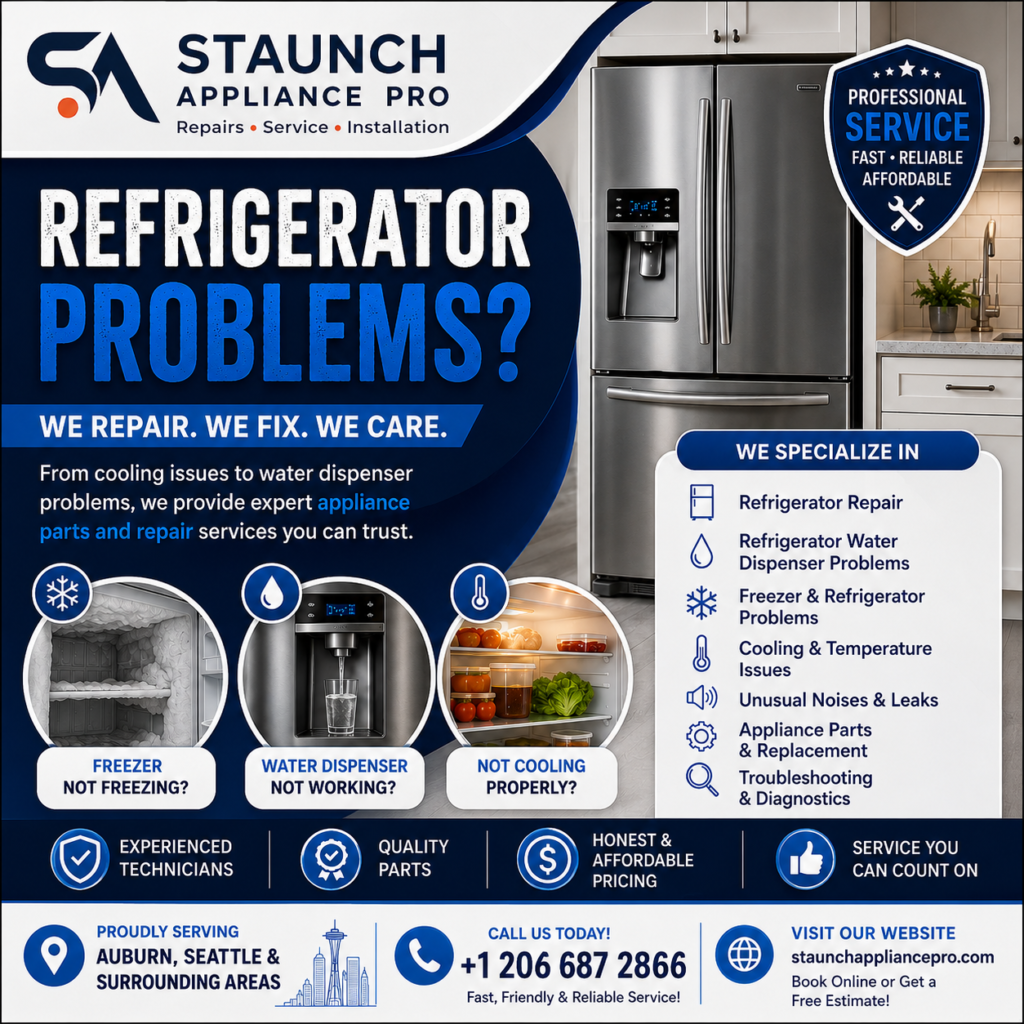
Appliance Parts and Repair: Complete Guide to Refrigerator Problems and Troubleshooting A refrigerator is one of the most important appliances in any home. We depend on it every day to keep fresh food cold, preserve leftovers, make ice, and store frozen products. So when the refrigerator starts making strange noises, stops cooling, leaks water, or the dispenser stops working, it can quickly become a major inconvenience. The good news is that many refrigerator problems can be diagnosed and repaired without replacing the entire appliance. In many cases, the problem is caused by a worn-out component, blocked airflow, damaged seal, faulty water valve, or another replaceable part. Staunch Appliance Pro provides professional appliance parts and repair services for homeowners throughout the Seattle and Auburn, Washington areas. Whether you are dealing with a refrigerator that is not cooling, a freezer that is too warm, or refrigerator water dispenser problems, understanding the possible causes can help you decide what to do next. Common Refrigerator Problems Homeowners Experience Refrigerators can experience many different problems over time. Some are minor and can be corrected with simple troubleshooting, while others require professional inspection and replacement parts. Some of the most common refrigerator problems include: Refrigerator not cooling Freezer not freezing properly Refrigerator is too cold Food is freezing inside the refrigerator Water leaking from the refrigerator Ice maker not making ice Water dispenser not dispensing water Refrigerator making loud or unusual noises Excessive frost inside the freezer Refrigerator running constantly Refrigerator turning on and off repeatedly Door seal or gasket problems Refrigerator temperature fluctuating Condenser coils becoming dirty Faulty fans, sensors, thermostats, or control boards If your refrigerator is showing one or more of these symptoms, early troubleshooting can sometimes identify a simple problem. However, continuing to operate an appliance with a serious fault may lead to additional damage. Refrigerator Troubleshooting: What Can You Check? Before scheduling professional refrigerator repair, there are a few basic checks you can safely perform. Check the Temperature Start by checking the refrigerator and freezer temperature settings. The refrigerator should generally be around 37°F, while the freezer is commonly set near 0°F. If someone accidentally changed the settings, adjusting them may solve the problem. However, if the refrigerator remains warm despite the correct temperature setting, there may be an issue with the cooling system, fan, thermostat, sensor, compressor, or airflow. Check the Refrigerator Door Seal The door gasket creates a seal around the refrigerator door and prevents cold air from escaping. Look around the gasket for: Cracks Tears Gaps Dirt or food buildup Areas where the gasket has become loose A damaged gasket can make the refrigerator work harder than necessary. It can also cause temperature problems and increase energy consumption. If the gasket is damaged, replacing it may be all that is needed. Make Sure Air Vents Are Not Blocked Refrigerators rely on proper airflow to distribute cold air. If food containers are pushed against the vents, cold air may not circulate correctly. This can result in one part of the refrigerator being cold while another area remains too warm. Keep the interior organized and leave space around the air vents. If the problem continues, a technician may need to inspect the evaporator fan or other components. Check for Excessive Ice or Frost A small amount of frost can be normal, but heavy ice buildup may indicate a defrost problem. A faulty defrost heater, thermostat, timer, sensor, or control board can cause excessive frost. As ice accumulates, airflow can become restricted and the refrigerator may stop cooling properly. If frost keeps returning after being removed, the underlying problem should be diagnosed rather than repeatedly defrosting the appliance. Why Is My Refrigerator Not Cooling? One of the most common reasons homeowners search for refrigerator repair is a refrigerator that is not cooling properly. Several components work together to keep the refrigerator cold. If one component fails, cooling performance can be affected. Possible causes include: Dirty condenser coils Faulty evaporator fan Condenser fan problems Blocked airflow Damaged door gasket Faulty temperature sensor Thermostat problems Defrost system failure Compressor problems Refrigerant system issues The location and symptoms of the problem can provide useful clues. For example, a refrigerator with a cold freezer but a warm refrigerator compartment may have an airflow or evaporator fan issue. If both the refrigerator and freezer are warm, the problem may be related to the compressor, condenser system, control components, or another major part. Because refrigerators have multiple interconnected components, professional diagnosis is often the best way to avoid replacing parts unnecessarily. Refrigerator Water Dispenser Problems A water dispenser makes getting cold drinking water quick and convenient. But when it suddenly stops working, several different problems could be responsible. Common refrigerator water dispenser problems include: Clogged water filter Frozen water line Kinked water supply line Low water pressure Faulty water inlet valve Defective dispenser switch Frozen reservoir Electrical or control problems Check the Water Filter A clogged water filter is one of the easiest things to check. If the filter has not been replaced according to the manufacturer’s recommendations, restricted water flow can affect the dispenser and ice maker. Make sure the replacement filter is compatible with your specific refrigerator model. Check the Water Supply If the refrigerator has a water line connected to the home’s water supply, check that the line has not become kinked or disconnected. A restricted supply can prevent water from reaching the dispenser. Is the Water Line Frozen? In some refrigerators, the water line inside the door or refrigerator compartment can freeze. When this happens, the dispenser may stop producing water even though the refrigerator appears to be operating normally. If replacing the filter and checking the supply does not solve the issue, professional appliance service may be necessary. Freezer and Refrigerator Problems The freezer and refrigerator compartments are closely connected, so a problem in one area can affect the other. For example, if the freezer develops excessive frost, airflow into the refrigerator compartment may become restricted. This can cause the refrigerator
How to Install a Dishwasher & Complete Dishwasher Buying Guide
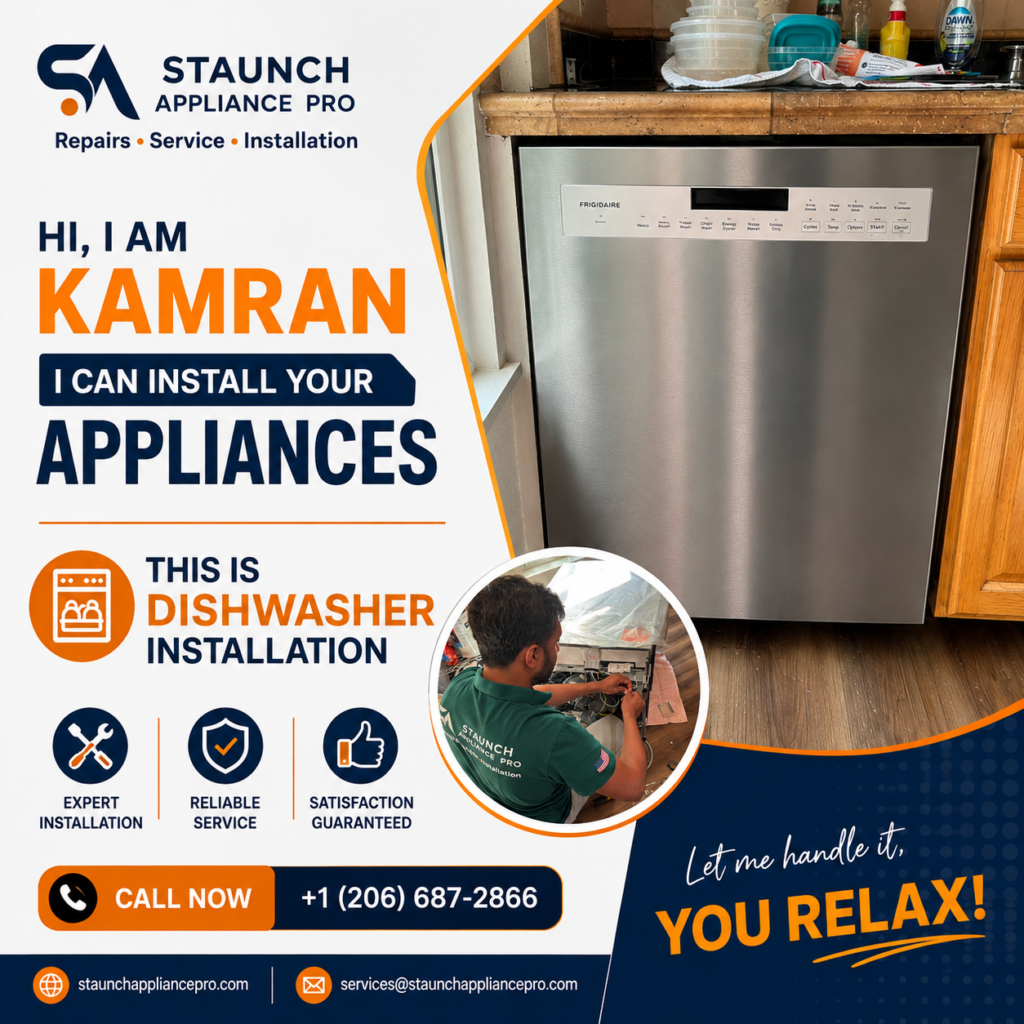
Dishwasher Installation: How to Install a Dishwasher & Complete Dishwasher Buying Guide Installing a dishwasher can make your kitchen routine much easier, but choosing the right appliance and making sure it is installed correctly are equally important. A dishwasher needs proper water, drainage, electrical, and leveling connections to operate safely and efficiently. Whether you are replacing an old dishwasher or installing one for the first time, this guide explains everything you need to know about dishwasher installation, how the installation process works, and what to consider when buying a new dishwasher. Why Professional Dishwasher Installation Matters A dishwasher may look simple to install, but incorrect installation can lead to water leaks, drainage problems, poor cleaning performance, unusual noises, or damage to your kitchen cabinets and flooring. Professional dishwasher installation helps ensure that: The dishwasher is properly leveled and secured. Water supply connections are installed correctly. Drain hoses are properly connected. Electrical connections meet safety requirements. The dishwasher fits correctly under the countertop. The appliance is tested before the installation is completed. A professional installation can also help identify potential plumbing or electrical issues before they become expensive problems. How to Install a Dishwasher The exact installation process varies depending on the dishwasher model and your home’s existing plumbing and electrical setup. However, a typical dishwasher installation involves several important steps. Measure the Installation Space Before buying a dishwasher, measure the opening where the appliance will be installed. Measure: Width Height Depth Make sure there is enough clearance for the dishwasher door to open properly and for the water, drain, and electrical connections behind the unit. Turn Off the Water and Power Safety should always come first. Before installation begins, the appropriate water supply and electrical power should be turned off. If you are unsure how to safely disconnect an existing appliance, it is better to have a professional handle the process. Remove the Old Dishwasher If you are replacing an existing dishwasher, the old unit needs to be disconnected carefully. The installer will typically disconnect the water supply, drain connection, and electrical connection before removing the appliance from the cabinet opening. Connect the Water Supply The dishwasher needs a reliable water supply connection. The supply line must be connected securely to help prevent leaks. A professional installer will also check the connection for leaks before completing the installation. Connect the Drain Hose The dishwasher drain hose must be connected correctly to the home’s drainage system. A properly installed drain connection helps prevent: Standing water Slow drainage Backflow Unpleasant odors Drainage leaks Connect the Electrical Supply Dishwashers require a safe and appropriate electrical connection. Depending on the appliance and local requirements, the electrical setup may involve a dedicated circuit, junction box, or approved outlet. Electrical work should be handled according to local codes and manufacturer requirements. If you are not qualified to work with electrical connections, contact a professional appliance installer. Level and Secure the Dishwasher A dishwasher must sit level inside the cabinet opening. If the appliance is tilted or improperly positioned, the door may not close correctly and water may not drain properly. The dishwasher should also be secured according to the manufacturer’s installation instructions. Test the Dishwasher After installation, the dishwasher should be tested to make sure: Water enters correctly. The appliance drains properly. There are no water leaks. The door opens and closes correctly. The dishwasher operates normally. Testing the appliance before completing the installation can help identify installation problems immediately. Dishwasher Buying Guide: What Should You Look For? If you are purchasing a new dishwasher, installation is only one part of the decision. Choosing the right appliance can make a significant difference in performance, convenience, and long-term operating costs. Choose the Right Size The dishwasher must fit the available space in your kitchen. Measure the cabinet opening before purchasing an appliance. Do not rely only on the dimensions listed for the dishwasher itself—allow space for connections and installation. Consider Capacity Think about how many dishes your household typically washes. A larger household may benefit from a higher-capacity dishwasher, while a smaller household may prefer a compact model. Check Energy Efficiency Energy-efficient dishwashers can help reduce water and electricity consumption. Look for models with strong efficiency ratings and features that match your household’s needs. Consider Noise Level If your kitchen is close to bedrooms, a living room, or an open-plan space, dishwasher noise may be an important consideration. Check the manufacturer’s noise rating before purchasing. Look at the Wash Cycles Modern dishwashers can offer different cycles for different cleaning needs. Common options may include: Normal wash Heavy-duty wash Quick wash Eco cycle Delicate cycle Sanitizing cycle Choose a dishwasher with cycles that you are actually likely to use. Check the Interior Layout The design of the racks can affect how many dishes you can fit inside the dishwasher. Look for adjustable racks, flexible loading options, and suitable spaces for plates, glasses, cookware, and utensils. Consider Smart Features Some modern dishwashers offer smart features such as app connectivity, remote monitoring, alerts, and customized washing programs. These features can be convenient, but they are not essential for every household. Check Installation Requirements Before Buying This is one of the most important steps. Before purchasing a dishwasher, check whether the model requires any special: Water connections Drain configuration Electrical requirements Cabinet modifications Installation accessories Understanding these requirements ahead of time can prevent installation delays. Common Dishwasher Installation Problems Improper installation can cause several common problems. Dishwasher Leaking A loose or incorrectly fitted water connection can cause leaks. Even a small leak can eventually damage flooring, cabinets, or surrounding areas. Dishwasher Not Draining A blocked or incorrectly installed drain hose can prevent the dishwasher from draining properly. Dishwasher Not Level An unlevel dishwasher can affect door operation, cleaning performance, and drainage. Dishwasher Not Turning On Electrical connection problems, circuit issues, or installation errors can prevent the appliance from operating. Dishwasher Making Unusual Noises Some noise is normal during a wash cycle, but unusual sounds may indicate an installation issue, an
Microwave Repair in Auburn: What You Can Fix Yourself, and What to Leave to a Pro

Your microwave hums, the plate spins, and nothing happens to your soup. Or it doesn’t turn on at all. Before you drive to the appliance store, most microwave problems fall into two buckets: things you can safely check yourself in ten minutes, and one specific thing you should never touch. This guide covers both, and where Staunch Appliance Pro comes in for homeowners across Auburn who’d rather have someone else deal with it. Common Microwave Problems We See in Auburn Homes: Won’t turn on at all Display is dark, no hum, nothing. Often the outlet, breaker, or door switch — not the microwave itself. Runs but doesn’t heat Turntable spins, light’s on, timer counts down — food stays cold. Usually the magnetron, diode, or capacitor. Turntable won’t turn Almost always the roller ring or drive motor coupler — a genuinely easy DIY fix. Usually, a damaged mica waveguide cover or metal touching the cavity wall. Stop using it immediately. Door won’t latch or seal A safety-critical fix — the door interlock switches prevent radiation leakage and won’t let the unit run if faulty. Loud buzz or rattle Can be a failing transformer hum, a loose fan blade, or debris in the turntable track. WHAT YOU CAN SAFELY FIX YOURSELF These are the checks a technician runs first — and the ones you can do at home with the microwave unplugged, before calling anyone. Rule out the obvious Test the outlet with another device, check the breaker or GFCI, and make sure the door is latching fully, most “dead” microwaves are a tripped outlet, not a broken unit. Clean the door switches Food grime on the interlock switches is a common cause of a microwave that won’t start. Unplug, open the door, and wipe down the visible switch contacts near the door hinge. Replace the roller ring or coupler If the turntable won’t spin, the roller ring ($8–$15) or the motor coupler underneath the glass tray is the usual culprit — a snap-in swap with no tools required. Inspect the mica waveguide cover The small mica sheet on the cavity wall protects the magnetron. If it’s burnt, bubbled, or has holes, that’s likely your sparking — it’s an inexpensive, tool-free replacement. Check the fuse — visually only A blown thermal or ceramic fuse will stop the unit dead. You can visually inspect it once the microwave is unplugged and the case is off — but stop here. Testing it live is where DIY should end. Signs You Need Microwave Repair Near You — Not a YouTube Video Visible sparking, arcing, or a burning smell from inside the cavity. It hums and runs a full cycle but food stays cold, even after checking the fuse and mica cover. Repeated error codes on a built-in or over-the-range model. The door won’t latch securely, or the interlock switches keep failing. Any repair that requires opening the high-voltage section behind the control panel. Why Auburn Searches “Microwave Repair Near Me” and Finds Staunch Appliance Pro We’re a local appliance repair company, not a call center dispatching to whoever’s closest. Every technician who comes to your Auburn kitchen carries capacitor discharge tools, replacement magnetrons for most major brands, and the training to make the call your safety depends on. SAME DAY WARRANTIED ALL BRANDS Appointment Available PARTS & Labor Built-In & Counterpart Call Now : +1 206 687 2866 Proudly Serving Auburn and the Surrounding Area Seattle Tacoma Kent Fedral Way SeaTac Renton Algona Auburn Beaux Arts Village Federal Way Clyde Hill Yarrow Point Hunts Point Bellevue Black Diamond Bothell Vashon Carnation Enumclaw Fall City Fall City Issaquah Kenmore Bothell Snoqualmie University Place Parkland Fife Sumner Puyallup Seattle Tacoma Kent Fedral Way SeaTac Renton Algona Auburn Beaux Arts Village Federal Way Clyde Hill Yarrow Point Hunts Point Bellevue Black Diamond Bothell Vashon Carnation Enumclaw Fall City Fall City Issaquah Kenmore Bothell Snoqualmie University Place Parkland Fife Sumner Puyallup Lost about Location? Call Now at: +1 206 687 2866 STOP GOOGLING- START FIXING Microwave repair near Auburn — same-day slots often available.
Appliance Maintenance Tips That Save Auburn, WA Homeowners Money

Appliance Maintenance Tips That Save Auburn, WA Homeowners Money Regular appliance maintenance is one of the easiest ways to avoid costly breakdowns, extend the life of your equipment, and keep your home running smoothly. At Staunch Appliance Pro, located at 212 1st St NE, Auburn, WA 98002, we don’t just fix appliances when they break — we want to help local homeowners prevent problems before they start. Here are our top maintenance tips for the appliances you rely on every day. Refrigerator Maintenance Tips: Your refrigerator runs 24/7, so a little upkeep goes a long way: Clean the condenser coils every 6 months. Dusty coils make your fridge work harder and can lead to early compressor failure. Check door seals (gaskets) for cracks or gaps. A loose seal lets cold air escape, raising your energy bill. Keep the temperature set correctly — between 37–40°F for the fridge and 0°F for the freezer. Don’t overpack the fridge. Proper airflow keeps cooling efficient. If your refrigerator is making unusual noises or not cooling evenly, it may be time for a professional inspection. Searching for “refrigerator repair near me” in the Auburn area? Staunch Appliances can help before a small issue becomes a major one. Washer and Dryer Care: Laundry appliances see heavy daily use, and small habits make a big difference: Clean the lint trap after every load and check the dryer vent for blockages at least once a year — this also reduces fire risk. Don’t overload the washer. Overloading strains the motor and reduces cleaning performance. Run a cleaning cycle monthly on your washer to prevent mold and odor buildup, especially for front-loading machines. Check hoses regularly for cracks, bulges, or leaks, and replace them every 5 years as a precaution. Dishwasher Upkeep: A well-maintained dishwasher cleans better and lasts longer: Clean the filter at the bottom of the dishwasher monthly to prevent clogs and odors. Wipe down the door seal to remove food debris and prevent mold. Run a vinegar cycle occasionally to clear mineral buildup, especially if you have hard water (common throughout the Auburn area). Check spray arms for clogged holes that can affect cleaning performance. Oven and Stove Maintenance: Clean spills promptly to prevent buildup that can affect heating elements and burners. Check oven door seals to ensure heat isn’t escaping, which can cause uneven cooking and higher energy use. Calibrate your oven temperature periodically — many ovens drift over time and may need a quick technician adjustment. Avoid using oven cleaner sprays on self-cleaning ovens unless specified by the manufacturer, as they can damage coatings. When to Call a Professional: DIY maintenance handles a lot, but some issues need an expert eye. If you notice any of the following, it’s time to schedule a repair visit with Staunch Appliances: Unusual noises, smells, or smoke from any appliance Appliances that cycle on and off repeatedly Visible leaks or water pooling near appliances Error codes that won’t clear after a reset A noticeable spike in your energy bill without a change in usage Local Maintenance and Repair Service in Auburn, WA: Staying ahead of appliance issues is always more affordable than emergency repairs or full replacements. If you’re in Auburn, WA (98002) or nearby communities like Kent, Federal Way, Sumner, or Pacific, Staunch Appliances offers maintenance check-ups and repair services to keep your home appliances running efficiently year-round.
Trusted Appliance Repair in Auburn: Why Staunch Appliance Pro is your local go-to:

Trusted Appliance Repair in Auburn:Why Staunch Appliances Is Your Local Go-To Trusted Appliance Repair in Auburn:Why Staunch Appliances Is Your Local Go-To Trusted Appliance Repair in Auburn: Why Staunch Appliances Is Your Local Go-To When your refrigerator stops cooling, your washer won’t spin, or your oven refuses to heat up, you need a repair team that’s fast, reliable, and right around the corner. That’s where Staunch Appliances comes in. Located at 212 1st St NE, Auburn, WA 98002, we’ve built our reputation by helping homeowners and businesses throughout Auburn and the surrounding King and Pierce County communities get their appliances back up and running quickly and affordably. Local Appliance Repair You Can Count On: Searching for “appliance repair near me” or “appliance repair Auburn WA” often turns up a long list of options, but not all repair companies offer the same level of expertise, transparency, and convenience. At Staunch Appliance Pro, our technicians are trained to work on all major brands and appliance types, including: Refrigerator and freezer repair Washer and dryer repair Dishwasher repair Oven, stove, and range repair Microwave repair Garbage disposal repair Whether you’re dealing with a leaking refrigerator, a dryer that won’t heat, or a dishwasher that leaves dishes dirty, our team diagnoses the issue accurately the first time, saving you money on unnecessary parts or repeat visits. Why Choose an Auburn-Based Appliance Repair Company? Choosing a local appliance repair service in Auburn, WA has real advantages. A company based right in your zip code (98002) means faster response times, technicians who know the area, and a business that’s invested in its community reputation. When you search for “Auburn WA appliance repair” or “local appliance technician near 98002,” you want a company that shows up on time, communicates clearly, and stands behind its work. Staunch Appliances proudly serves homeowners throughout Auburn, as well as nearby areas including Kent, Federal Way, Sumner, and Pacific, WA. Our central location on 1st St NE allows us to schedule same-day or next-day appointments for most repair requests. Common Appliance Problems We Fix in Auburn Homes: Every week, our technicians respond to calls from local residents dealing with issues like: A refrigerator that’s running but not cooling properly A washing machine that won’t drain or spin An oven with uneven heating or a faulty igniter A dishwasher that won’t start or fails mid-cycle Strange noises coming from a dryer drum If any of these sound familiar, don’t wait until a small issue becomes an expensive replacement. Most appliance problems are far cheaper to repair than to replace, especially when caught early by an experienced technician. What to Expect When You Call Staunch Appliances: Quick scheduling — We offer flexible appointment windows that work with your schedule. Accurate diagnostics — Our technicians arrive equipped to identify the root cause, not just the symptoms. Transparent pricing — You’ll know the cost before any work begins, with no hidden fees. Quality parts and workmanship — We use reliable replacement parts backed by our service guarantee. Serving Auburn, WA and the Surrounding Communities: If you’re located in or near the 98002 zip code and searching for dependable appliance repair, Staunch Appliances is ready to help. From major kitchen appliances to laundry room essentials, our team has the tools and training to get your household running smoothly again.
7 Simple Appliance Maintenance Tips Every Homeowner Should Know

7 Simple Appliance Maintenance Tips Every Homeowner Should Know Most homeowners only think about their appliances when something goes wrong. But just like your car needs regular oil changes, your home appliances need routine care to perform at their best. A little maintenance goes a long way — saving you money on repairs, extending the life of your machines, and keeping your home running efficiently. Here are 7 easy maintenance tips from the experts at Staunch Appliance Pro to help you stay ahead of costly breakdowns. Clean Your Refrigerator Coils Twice a Year: Dust and debris build up on the condenser coils at the back or bottom of your fridge, forcing it to work harder and use more energy. Unplug the unit and gently vacuum the coils every six months to keep it running efficiently and extend its lifespan. Check Your Washing Machine Hoses Regularly: Cracked or bulging washing machine hoses are one of the leading causes of home water damage. Inspect the hoses every few months and replace them every 3–5 years — even if they look fine. It’s a small investment that can prevent a very expensive disaster. Clean Your Dryer Lint Trap After Every Load: This one seems obvious, but many people skip it. A clogged lint trap not only reduces dryer efficiency — it’s a serious fire hazard. Beyond the trap, have your dryer vent duct professionally cleaned at least once a year to prevent dangerous buildup. Run Your Dishwasher on a Monthly Cleaning Cycle: Food particles, grease, and soap scum accumulate inside your dishwasher over time, leading to odors and poor cleaning performance. Once a month, run an empty cycle with a dishwasher cleaning tablet or a cup of white vinegar on the top rack to keep it fresh and functioning well. Don’t Overload Your Oven’s Self-Clean Feature: The self-clean cycle runs at extremely high temperatures that can strain your oven’s components. Use it sparingly — no more than a few times a year — and wipe up spills manually when possible, to reduce the need for heavy-duty cleaning cycles. Level Your Appliances Properly: An unleveled washing machine or refrigerator causes unnecessary vibration and wear on internal parts over time. Use a simple bubble level and adjust the feet on your appliances to make sure they sit flat and stable on the floor. Schedule Annual Professional: Even with great at-home care, nothing replaces a trained eye. An annual inspection from a qualified technician can catch small issues before they become major repairs — saving you significant time and money down the road. Let Staunch Appliance Pro Help: At Staunch Appliance Pro, we don’t just fix appliances — we help you get the most out of them. Whether you need a routine maintenance check or a full repair, our certified technicians are ready to help.
Keep Your Home Running Smoothly — Trust Staunch Appliance Pro

Keep Your Home Running Smoothly — Trust Staunch Appliance Pro Your appliances work hard every day. From the refrigerator keeping your groceries fresh to the washing machine tackling the week’s laundry, these essential machines are the backbone of your home. When one breaks down, life doesn’t slow down — but we can help you get back on track fast. At Staunch Appliance Pro, we specialize in expert appliance repair and maintenance services that are reliable, affordable, and built around your schedule. Why Choose Staunch Appliance Pro? Experienced Technicians You Can Trust:Our certified professionals have years of hands-on experience diagnosing and repairing all major appliance brands. Whether it’s your dishwasher, dryer, oven, or refrigerator, we’ve seen it all — and we fix it right the first time. Fast Turnaround, Minimal Disruption:We know a broken appliance is more than just an inconvenience — it disrupts your entire routine. That’s why we offer prompt scheduling, same-day service when available, and efficient repairs so your home is back to normal as quickly as possible. Transparent Pricing, No Surprises:We believe in honest, upfront quotes before any work begins. No hidden fees, no surprise charges — just fair pricing for quality service. All Major Brands Serviced:From Samsung and LG to Whirlpool and GE, our team is equipped to service every make and model on the market. Staunch Appliance Pro Services Includes: Refrigerator Fast, professional refrigerator repair services to keep your appliance running efficiently and your food fresh. Wall Oven Professional wall oven repair services for consistent performance and lasting reliability. Freezer Expert freezer repair services to keep your food safely frozen and your appliance running efficiently. Ice Maker Dependable ice maker repairs by experienced technicians for lasting performance. Dish Washer Keep your dishwasher running like new with fast, reliable repairs from Staunch Appliances Pro—we fix leaks, poor cleaning, drainage issues, and more with expert care. Garbage Disposal Restore your garbage disposal with fast, dependable repairs from jams, leaks, clogs, strange noises, and more to keep your kitchen running smoothly. All Services Don’t Wait Until It’s Too Late: Ignoring a small appliance issue can quickly turn into a costly replacement. Catching problems early with a professional inspection saves you time, money, and stress in the long run. Ready to book a service? Contact Staunch Appliance Pro today and experience the difference that truly professional appliance care makes. 📞 Call us or visit our website to schedule your appointment — because your home deserves nothing less than the best.